What really decides the price of a used motorhome
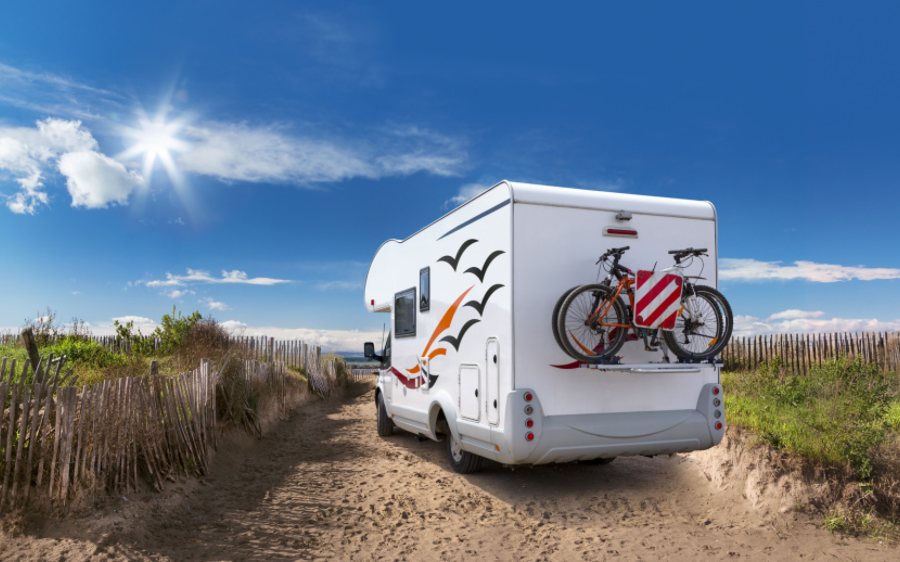
Ask what a used motorhome is worth and the honest answer is: it depends, on more than the badge and the year. A motorhome is valued as two things at once, a commercial vehicle and a small house on wheels, and each brings its own rules. Below we walk through the factors that actually move the price, as mechanisms rather than figures, so you know what you can still influence before selling.
Body type and base vehicle
The base vehicle is the van or chassis underneath, built by one of a few large manufacturers. Its value follows the logic of any light commercial vehicle: engine and gearbox, mileage, service history, general condition. Parts and workshops are easy to find, which keeps this side predictable.
The body is where motorhomes differ, and it determines who is looking.
| Body type | How buyers see it |
|---|---|
| Campervan / panel van conversion | Compact, usable every day. Broad demand, easy to park and resell. |
| Low-profile (semi-integrated) | Living space without the bulk. The widest group of buyers, so steady demand. |
| Overcab (alcove) | Extra berths, popular with families. Buyers accept height, wind sensitivity and fuel use. |
| A-class (fully integrated) | Comfort for long journeys. A smaller pool of buyers who look closely at condition. |
| Caravan | No engine, so nearly everything rests on the body: dryness, layout, weight. |
The layout matters too. A fixed bed, a separate shower and a sensible kitchen appeal to many buyers; a highly individual layout narrows the field.
Year and mileage, read correctly
Age counts, but not in a straight line. The steepest drop comes in the first years; after that the curve flattens and condition matters more than the date. First registration also fixes the engine and emissions technology, which matters to buyers heading for low-emission zones abroad. We buy almost every make from model year 2005 onwards.
Mileage on a motorhome is read differently from a car's. A very low reading is not automatically good news. A vehicle that has barely moved for years often carries standing damage: seized brakes, flat-spotted tyres, dried-out seals, stale fuel. A motorhome driven and serviced regularly, even with more kilometres, can be the healthier vehicle. A buyer looks for a plausible fit between age, mileage and service history.
Damp: the factor that outweighs the rest
Nothing affects the value of a motorhome like water inside the body, and the reason is less the damage itself than the uncertainty around it. From the surface nobody can tell how far the water has travelled through the walls, and putting it right is labour-intensive. A buyer who cannot judge the extent assumes the worse case and prices accordingly.
That is exactly why a body that can be shown to be dry is such a strong argument. Moisture readings from previous years take that uncertainty off the buyer's plate and spare you a discussion that otherwise almost always ends in the buyer's favour. A motorhome with damp is not worthless, but its price is then driven by the repair effort. We also buy vehicles with such damage, among other things for export. How to recognise damp, and how to sell a vehicle that has it, is a subject of its own that we cover in a separate guide.
Gas system, MFK and the rest of the technology
The gas check and the MFK move the price in the same way. With a current certificate the buyer can use the vehicle straight away and has nothing to deduct. If it is missing or the next inspection is close, that is not a deal-breaker, but the buyer prices in the inspection plus whatever repairs it might reveal. A recent pass therefore pays off at the sale, and an expired one becomes a deduction. Either way it is better to state the position openly than to explain it at the viewing.
Beyond that: tyres (age as much as tread), batteries, heating, fridge, water pump, electrics and control panel. What works needs no explanation. What does not should be mentioned before the viewing, not discovered during it.
Equipment, photos and paperwork
Not every franc spent on a motorhome comes back at the sale. Some equipment is wanted by almost every buyer; some only ever suited the previous owner.
- Usually adds value: solar panels, awning, bike rack or rear garage, reversing camera, air conditioning, tow bar, second leisure battery, inverter, satellite system, a winterised water system.
- Neutral: personal decoration, one-off conversions, accessories tied to the old owner's habits.
- Can count against you: heavy tuning, modifications not entered in the vehicle documents, work without invoices.
Paperwork turns claims into facts. The Fahrzeugausweis (registration document), service book, repair and fitting invoices, gas certificate and last MFK report all raise a buyer's confidence, and confidence closes the gap between the price you ask and the price you get.
Finally, photos. Most offers are drafted from pictures and a few details before anyone has seen the vehicle, so the images set the quality of the estimate. Shoot in daylight: all four sides outside, the interior with bed, kitchen and bathroom, the odometer, the tyres and any damage. Showing a fault rather than hiding it gets you a more reliable offer and a handover without arguments.
To find out what these factors add up to for your vehicle, send us the details through the offer form: make, model, body type, mileage, first registration, fuel type and a few photos. The offer is free and non-binding, and as a rule you hear from us within 24 hours.
Get your offer — A few details, a few photos – you usually hear from us within 24 hours.
Request an offer